This grouting video can be used by homeowners, masons and other installers.
Please review our installation video before getting started.
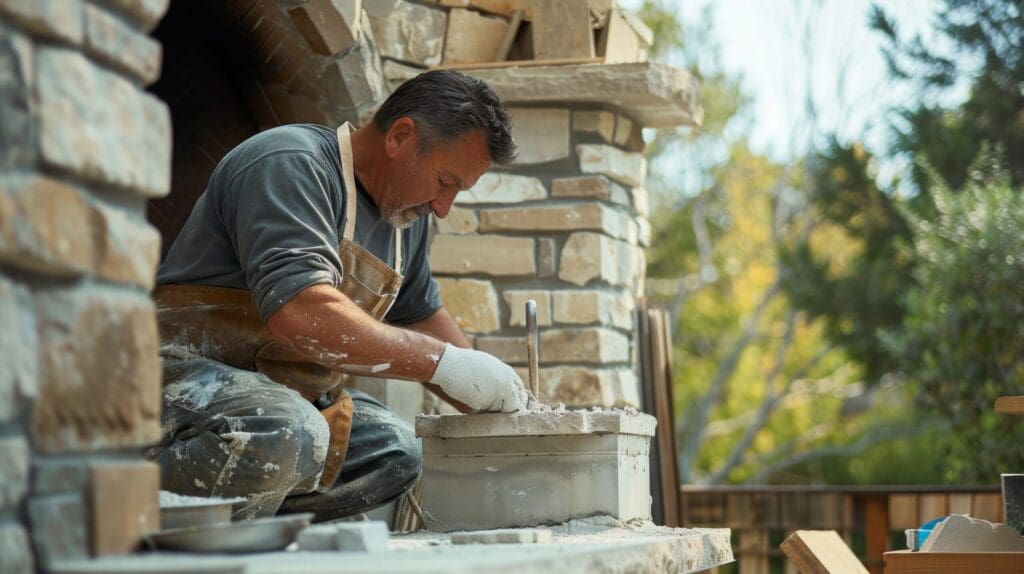
Before you begin, ensure that the hearth stones, which require a bed of grout, are properly set. You can use any regular grout mix since it won’t be visible. Once the hearth is level, set, and dry, you can lay up the entire mantel dry on 1/4″ spacers. As you work your way up, anchor each stone to a stud using L-brackets or brick ties, with L-brackets being preferred due to their rigidity. It’s important to set the mantel 1/4″ off the wall, leaving a grout joint between the mantel and the wall. This practice not only follows good masonry standards but also helps accommodate any wall variances.
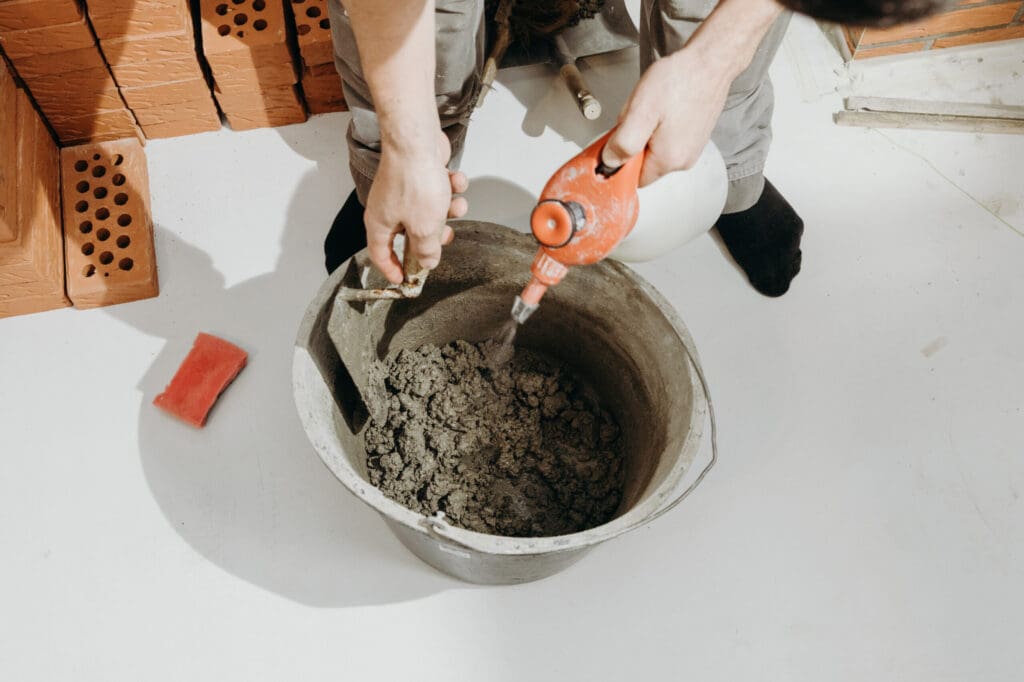
Your mantel comes with a bag of sand that is color-matched to the stone. This sand is for mixing the finish-out grout. For best results, mix 3 parts sand with 1 part white Portland cement or white sandless mortar mix type N. (Never use gray cement.) If white mortar mix type N is not available in your area, you can use a formula of 3 parts sand, 1 part lime, and 1 part white Portland cement.
To grout your stone fireplace, you may use a grout bag to inject the grout into the joints. If you are using our “Buff” sand, sift out the larger aggregates to prevent clogging the tip of the grout bag. After the grout dries, the joints will appear slightly lighter than the stone, but the color will mellow after acid-washing the entire mantle. To avoid grout staining the stone surface, tape the edges of the joints with blue masking tape. This also helps prevent damage to the stone edges during handling or setting.
An alternative to taping the joints is to use a water saturation method. Overgrout the stone fireplace by saturating the stones thoroughly with a 5-gallon garden sprayer. The stones should soak up as much water as possible, preventing the grout from discoloring the joints. It’s crucial to saturate the stones completely before grouting to ensure no taping is needed. As you grout, use clean sponges to keep the stone surface free of excess grout. Continuously rinse and replace the water in your bucket to keep the sponges clean.
Once you’ve finished grouting, allow the joints to dry. If you’ve followed the steps carefully, your fireplace grout should be secure, with the joints matching the tone of the stone. Remember to handle the stone with care during this process to avoid any unwanted stains or damage. Once cured, finish by cleaning your stone to remove any haze. Protect your work by applying sealant — seal the grout for long-lasting results.