
Presidents’ Day Fireplace Facts
Presidents’ Day turns our thoughts toward patriotism — and, at Old World Stoneworks, where it intersects with fireplaces, of course.
This annual holiday, celebrated on the third Monday in February, began in 1885 as a commemoration of George Washington’s birthday (February 22). Over time, it evolved into the national celebration of all American presidents.
To mark the occasion, we’re sharing an updated collection of fun and fascinating fireplace facts connected to our nation’s leaders — reminders that fireplaces have always held a special place in American history.
The White House contains 28 fireplaces.
Across state rooms, sitting rooms, and historic wings, the White House features 28 fireplaces. Many of them have served as backdrops for diplomatic meetings, family traditions, and famous presidential moments.
President James Monroe’s private house featured two marble mantels from Europe.
Monroe’s home, Oak Hill, included two beautiful marble mantels sent from Europe by the Marquis de Lafayette. The gesture reflected both refined architectural taste and the close friendship between the two men.
Theodore Roosevelt customized the State Dining Room fireplace
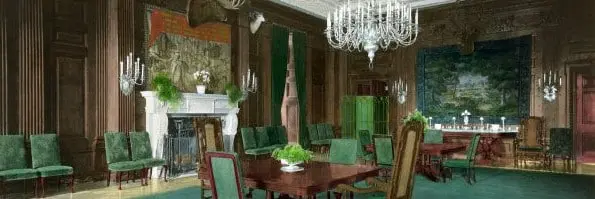
Roosevelt, known for his love of the outdoors, placed a moose head above the State Dining Room fireplace. He also ordered the original mantel carvings to be changed from lions to North American bison — a patriotic touch reflecting the wildlife he admired.
Franklin D. Roosevelt added John Adams’ famous quote to the State Dining Room fireplace.
At the close of World War II, FDR had a well-known line from an 1800 letter by John Adams carved into the stone fireplace. The inscription reads:
“I pray Heaven to bestow the best of Blessings on this House and on all that shall hereafter inhabit it.
May none but honest and wise Men ever rule under this roof.”
The message remains in the State Dining Room today.
Richard Nixon often worked beside a roaring fire.
Nixon enjoyed working near a fire in the Telegraph Room, sometimes even burning logs in the summer while the air conditioning ran. Wasteful, yes — but he appreciated the comfort of a glowing hearth.
The White House maintains extremely strict fire-safety protocols.
Any trace of smoke immediately alerts the Secret Service and dispatches multiple fire engines. When Marine One arrives or departs, a dedicated fire unit stands by. Every firefighter must pass clearance before entering the grounds.
Several First Families reported sensing Abraham Lincoln’s presence near the Lincoln Bedroom fireplace.
Eleanor Roosevelt, Lady Bird Johnson, and Susan Ford all described moments where they felt or saw something in the room — often near the fireplace — that they believed to be President Lincoln’s ghost.
Ronald Reagan and Mikhail Gorbachev began their 1985 summit in front of a fireplace.
During their first meeting in Geneva, the two leaders sat with their interpreters beside a blazing fire. It became a symbolic starting point for the conversations that helped ease Cold War tensions.
Jimmy Carter delivered his famous 1977 fireside chat beside a White House fireplace.
His casual beige cardigan and relaxed setting helped create an approachable, homey atmosphere during a time of national energy concerns.
Barack Obama held a modern “fireside” conversation in 2013.
Obama hosted a Google Hangout session in front of the Roosevelt Room fireplace — a digital-era update of the fireside tradition.
Fireplaces are so special they cross political lines. They have been loved by Democrats and Republicans, early presidents and modern ones alike.
If you’re feeling inspired to celebrate Presidents’ Day with a distinctive new look for your fireplace, contact Old World Stoneworks today. We’d love to help you create a mantel fit for history.