
Ducted vs. Recirculating Range Hoods: Which Is Right for Your Kitchen?
In any well-designed kitchen, proper ventilation is crucial. It’s not just about keeping the air fresh; it’s about maintaining a healthy and comfortable cooking environment. At the heart of this ventilation system is the range hood, a vital appliance that removes cooking odors, smoke, and excess heat from your kitchen.
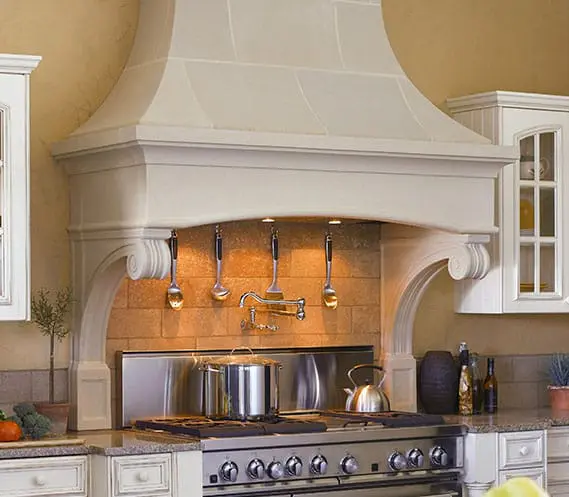
At Old World Stoneworks, we’re passionate about creating beautiful and functional kitchens. While we’re known for our exquisite cast stone range hoods that combine aesthetics with functionality, we also believe in educating our clients about all aspects of kitchen design. Today, we’re diving into the world of range hoods, specifically the differences between ducted and recirculating options.
Understanding Range Hoods
Before we compare ducted and recirculating range hoods, let’s briefly discuss what a range hood does. Essentially, a range hood is a fan-based ventilation system installed above your cooktop or stove. Its primary function is to remove airborne grease, combustion products, fumes, smoke, heat, and steam from the air by evacuation of the air and filtration.
There are two main types of range hoods: ducted and recirculating. Each has its own set of advantages and potential drawbacks, which we’ll explore in detail in our ducted and recirculating rangehood comparison.
Ducted Range Hoods
What is a ducted range hood? A ducted range hood, also known as a vented hood, works by pulling air from your kitchen and expelling it outside your home through a duct system. This type of hood is generally considered more effective at removing odors, smoke, and heat from your kitchen.
Advantages of Ducted Range Hoods:
- Efficient removal of smoke, odors, and heat
- Better at handling moisture, reducing kitchen humidity
- Ideal for heavy-duty cooking and high-heat methods
Potential Drawbacks:
- More complex installation, especially in existing homes
- Higher initial cost due to ductwork requirements
- May not be feasible in some kitchen layouts or multi-story buildings
Recirculating Range Hoods
What is a recirculating range hood? Instead of venting air outside, a recirculating range hood, (also called a ductless hood) passes the air through a filter to remove contaminants and then recirculates the cleaned air back into the kitchen.
Advantages of Recirculating Range Hoods:
- Easier and more flexible installation
- Lower initial cost
- Can be installed anywhere, regardless of exterior wall access
Potential Drawbacks:
- Less efficient at removing smoke, odors, and heat
- Does not reduce kitchen humidity
- Requires more frequent filter replacements and maintenance
Ducted vs. Ductless Range Hood: Factors to Consider
When choosing between a ducted and recirculating range hood, consider the following factors:
- Kitchen Layout: If your kitchen has easy access to an exterior wall, a ducted system might be more feasible. For kitchens without this access, a recirculating hood could be the better option.
- Cooking Habits: If you frequently engage in high-heat cooking or frying, a ducted hood will be more effective at removing smoke and odors.
- Budget: While ducted hoods are generally more expensive upfront due to installation costs, they may save money in the long run through improved efficiency and lower maintenance needs.
- Local Climate: In colder climates, a recirculating hood can help retain heat in your home, potentially saving on heating costs.
- Building Regulations: Some building codes may require ducted systems, especially for gas stoves. Always check local regulations before making a decision.
Maintenance and Care
Regardless of which type you choose, proper maintenance is key to ensuring your range hood functions effectively:
- Clean the exterior regularly with mild soap and water.
- For ducted hoods, check and clean the ductwork annually.
- For recirculating hoods, replace or clean the filters as recommended by the manufacturer.
- Inspect and clean the fan blades periodically to ensure optimal performance.
Making the Right Choice for Your Kitchen
Choosing between a ducted and recirculating range hood ultimately depends on your specific needs, kitchen layout, and cooking habits. Both types have their place in modern kitchens, and understanding their differences can help you make an informed decision.
At Old World Stoneworks, we offer a range of beautiful cast stone kitchen range hoods that can accommodate either ducted or recirculating systems. Our designs combine timeless elegance with modern functionality, ensuring that your range hood is not just a practical necessity but also a stunning focal point in your kitchen.
Remember, a well-chosen range hood does more than just remove cooking odors—it contributes to a healthier, more comfortable cooking environment and can even enhance your home’s energy efficiency.
Whether you’re leaning toward a ducted system for its superior ventilation or a recirculating hood for its installation flexibility, we’re here to help you find the perfect solution for your kitchen. Our team of experts can guide you through the selection process, ensuring you choose a range hood that meets your ventilation needs while complementing your kitchen’s aesthetic.
Ready to order your custom rangehood today? Let us help you create the kitchen of your dreams, complete with a range hood that’s as beautiful as it is functional. Contact Old World Stoneworks today.